Step 1: Understand the context
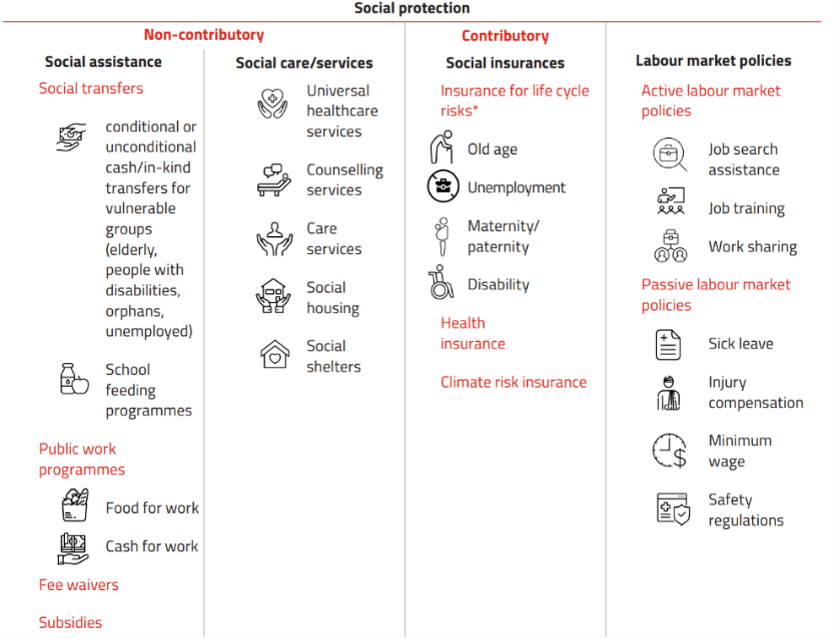
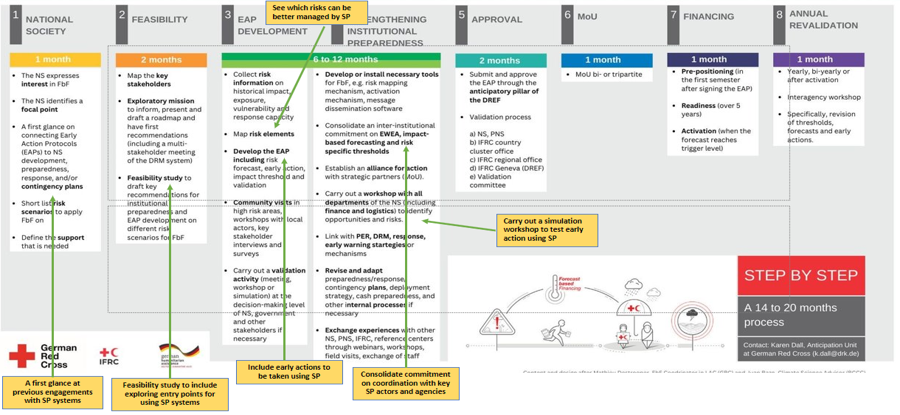
First, it will be important to understand the existing national social protection policy and program context to identify entry points and feasibility of leveraging existing systems. Apart from leveraging existing programs, a scoping can be done to determine if any new social protection policies are being drafted or an old one is being updated/reformed, and to explore opportunities to ensure that a future social protection program is anticipatory by design.
Step 2: In-depth technical analysis
As part of the design of an anticipatory action programme, it is important to understand how hazards impact people’s lives and livelihoods. When linking with social protection mechanisms, it will be key to conduct robust technical analysis that show where and how climate vulnerabilities and exposure overlap with existing social protection programme beneficaries and delivery channels (e.g. bank account coverage), so that anticipatory action using such systems can reach those affected wherever, whenever. In this regard, it will be important to understand what data is available with whom, how it relates to climate-related vulnerabilities, how frequently it is updated, etc.
Step 3: Advocate linkages between anticipatory action and social protection programs and systems
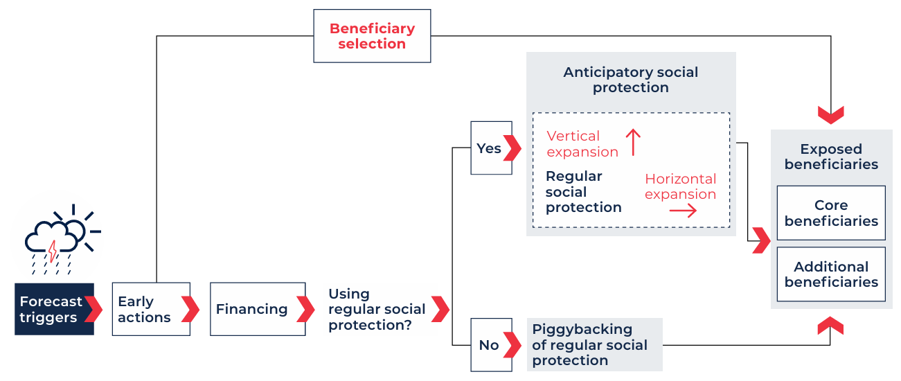
When social protection programs already exist and there is a common interest in making them scalable by integrating anticipatory action, it will be important to jointly advocate and collaborate to agree on the specific actions that can be taken through such programmes; and for this, capacity and resources are key. As part of the anticipatory action scoping study and advocacy strategy, it is essential to identify and agree on who is doing what and where in terms of social protection (past, present and planned interventions). If studies show that social protection programs might not be ready to take anticipatory action, there might still be opportunities to use components of systems, like beneficiary registries and payments/communications channels.
Step 4: Prioritize dialogue and understanding
It is key to promote dialogue and understanding across sectors and establish a process that aims to align and converge objectives of social protection and anticipatory action interventions at policy and program level. This needs to be anchored by coordination platforms/working groups that allow for continued dialogue and exchange.
Step 5: Start simple, build commitment
Depending on the local situation, anticipatory action could be introduced in phases, first targeting the most predictable hazards with relatively simple and affordable anticipatory actions using common social protection instruments (e.g. cash transfers), and then expanding to more complex actions or less predictable events. It will be important that donors and governments commit to fund this and assess the outcomes of their social protection investments to look at whether anticipatory actions have been taken and what difference they have made.