Specific guidance on anticipatory action in community-based disaster risk reduction

Summary

Anticipatory action can be implemented not only through national or sub-national Early Action Protocols (s/EAPs), but also by integrating it into community-based disaster risk management (CBDRM). Existing approaches such as the Roadmap to Community Resilience (R2R) and the enhanced Vulnerability and Capacity Assessment (EVCA) offer practical entry points to identify risks, warning signs, lead times and potential early actions together with communities. This chapter explains how anticipatory action is already and can be embedded in community resilience plans of action, community early warning systems (CEWS) and contingency plans, linking triggers, early actions, roles and responsibilities, and sustainable resources to enable communities to act before a hazard causes severe impacts. 

Introduction

This anticipatory action manual has a focus on a step-by-step guidance for (simplified) Early Action Protocols (s/EAPs), however there are also other approaches through which National Societies can implement anticipatory action. One of them is by integrating anticipatory action into community-based disaster risk management (CBDRM). 

While this interlinkage from community level to national level and vice versa is very important when developing an s/EAP, in this chapter, however, we want to focus on how you can implement anticipatory action on a community-level through CBDRM. 

The Roadmap to Community Resilience (R2R) and its key tool, the enhanced Vulnerability and Capacity Assessment (EVCA), are the main methods used within the Movement for CBDRM. They offer a structured methodology for communities to assess relevant risks, identify vulnerabilities, and strengthen their capacities. The central outcome of the R2R via the EVCA is the community resilience plan of action. It prioritizes activities that the community would like to take to reduce their risk. While the community resilience plan of action can encompass a range of risk reduction activities, community early warning systems (CEWS) and contingency plans often emerge as a priority.

Community resilience plan of action: Community resilience plans of action are the output of the Roadmap to Community Resilience (R2R) via the enhanced Vulnerability and Capacity Assessment (EVCA). They prioritize activities the communities would like to take to reduce their risk. They are usually timebound and detail where the funding for each activitiy comes from (e.g. community funding, as part of Red Cross Red Crescent projects). Normally after one year, the community reviews the progress as well as any new risk developments and makes a new community resilience plan of action.

Contingency plan: A contingency plan is a management and operational tool that defines the scope, roles and responsibilities, resources, procedures, coordination and communication mechanisms, and specific operational activities that a community intends to implement in preparation for and during an emergency, based on the likelihood of a given scenario (adapted from IFRC 2025, Contingency Planning Guide; link in the toolbox).

Community early warning system (CEWS): Early warning systems are a set of capacities needed to generate and disseminate timely and meaningful warning information to enable individuals, communities and organizations threatened by a hazard to prepare and to act appropriately and in sufficient time to reduce the possibility of harm or loss (from IFRC 2012, Community early warning systems: guiding principles; link in the toolbox). A community early warning system (CEWS) is a warning system that the community owns and runs. It is a people-centred, locally rooted mechanism through which at-risk communities themselves generate, interpret and act on warnings.

Step 1: Familiarize yourself with the Roadmap to Community Resilience (R2R)

When working on risk reduction and management with communities, the Roadmap to Community Resilience (R2R) is your guideline to follow (link in the toolbox). The same applies if you want to integrate AA into your community-based engagement. The guideline offers many tools for you to use, where aspects of anticipatory action are already included. Some tools are highlighted in the steps below. 

Step 2: Conduct an Enhanced Vulnerability and Capacity Assessment (EVCA)

To understand the risk and resilience of communities, the R2R guidance recommends using the Enhanced Vulnerability and Capacity Assessment as a participatory community risk assessment. It enables the communities to assess and analyse together with the National Society the risks they face through a step-by-step guidance. Several EVCA tools already include aspects of anticipatory action or provide entry points to incorporate anticipatory action even more. Below is a list of some EVCA tools with ideas on what to consider for AA while conducting the EVCA: 

The mapping exercise is a way to visualize risk exposure and can show different vulnerabilities, capacities and resources. When exploring anticipatory action as part of the EVCA, consider including in the mapping exercise different magnitudes a hazard can take, if possible, even under future climate change scenarios. For example, for floods, try to map who and what is affected during floods that happen more regularly, for instance every monsoon season, and in comparison, floods that happen less regularly, but have a higher impact overall. A tool that can help you to digitalize your maps is the SketchMap Tool. Check with local disaster management or meteorological authorities if there are already existing government-led scientific hazard and/or risk maps. Connect results of these government maps with the community drawn maps to feed into each other. 

As part of the EVCA, characterize together with the community different hazards with name, cause/origin, warning signs, lead time, frequency, period of occurrence and duration. This is a great entry point for anticipatory action. Important elements are especially the warning signs and lead time. It can give you an indication, if for a specific hazard the community already receives early warning with enough lead time to potentially conduct early actions. 

The historical profile is a tool of the EVCA to build a picture of past events and impacts that had an effect on the community, including their impacts on people, livelihoods, infrastructure, services etc. During these discussions, you should ask community members about the impacts of specific past events, whether there were any indications or early warnings before specific events and if yes, how long before. In case any actions were taken by the community based on those early warnings, it is important to document the action, as this helps identify potential early actions that could be embedded within a community contingency plan or a community early warning system.

The seasonal calendar explores the seasonality of events in a community over a one-year period. It is an EVCA tool that helps communities visualize when specific risks are most likely to materialize and how hazards have changed over the years to integrate discussions on climate change. It overlays the seasonality of weather with other key events in the community that can indicate vulnerability and risks. The seasonal calendar can later form the basis for a contingency plan that includes early actions on a specific priority hazard to develop a crisis timeline.  
A crisis timeline focuses on one hazard and is especially useful for slow-onset events like droughts. A crisis timeline would for example include the timing of rainy and dry season, calendar of activities of different livelihood groups, timing of hazard’s impacts on the different livelihood groups, timing of early warnings and potentially actions that could reduce the impact of the hazard. All this information is combined into an overall crisis timeline which helps to understand when hazards are occurring, when the impact is felt and at what time early actions would help to reduce the impact. You can access a 30–minute learning module on crisis timelines as part of anticipatory action on the FAO Learning platform (link in the toolbox). 

The resilience star tool of the EVCA is used to produce, consolidate and analyse information about the vulnerabilities, capacities and risks of a community. It brings all the data from the data collection process together and categorizes capacities and vulnerabilities for each hazard separately. Through focus group discussions or workshops, communities discuss their vulnerabilities and capacities across all 11 dimensions of community resilience. In particular, the questions on the dimension on risk knowledge and management and the health dimension can support with helping to integrate anticipatory action, when talking with the community about awareness of risks, knowledge of warning signals and preparedness measures within the community. The answer to these questions can inform on potential early actions as part of a community contingency plan or community early warning system. The facilitation guide on discussing the dimensions includes also specific questions on early warning early action that can help to anchor and improve anticipatory action in the communities (link in the toolbox).  

In addition, a structured guidance for conducting focus group discussions (FGDs) with communities and local authorities to assess the effectiveness, inclusivity, and trustworthiness of Early Warning Systems (EWS) is available through IFRC (link in the toolbox). 

Questions to include on early warning systems are: 

  • Does the community have an early warning system in place? 
  • Which early warning signs are used in the community to anticipate different hazards? 
  • How does the community early warning system work? Or if there is no early warning system in place: Which early warning signs does the community know? 
  • Does the community trust the early warning system? 
  • How much time does the early warning system give the community before the impact of the hazard (lead time)? 
  • How is the warning information communicated across the community? Are there specific channels or trusted networks? 
  • What actions does the community take when a warning is received?  
  • Which health signs, symptoms, diseases, or unusual events are monitored and reported by the community? 
  • Who is responsible for identifying and reporting potential health threats, and through which channels is this information communicated to health authorities and other relevant actors? 
  • What role do Red Cross Red Crescent volunteers, the local branch and other community-based actors currently play when an early warning is received? 
Step 3: Develop the community resilience plan of action, including AA aspects

The central outcome of the R2R via the EVCA is the community resilience plan of action. It prioritizes activities that the community would like to take to reduce their risk. While the community resilience plan of action can encompass a range of risk reduction activities, community early warning systems (CEWS) and contingency plans often emerge as a priority. You therefore do not have to include specific actions just on anticipation in the plan, but communities’ priorities to develop CEWS or contingency plans are your entry point to include anticipatory action into the community’s disaster risk management set-up. Don’t set up parallel systems but include AA in the existing and newly developed DRM systems based on the community resilience plan of action! 

Step 4.1: Develop a community early warning system (CEWS) action plan

If one of the activities included in the community resilience plan of action is to set up a community early warning system (CEWS), use it to include clearly identified early actions within the CEWS. For more details on how to choose early actions, please refer to chapter ’07. Select Early Actions’ in this manual. 

As a first step towards the CEWS, run a CEWS workshop with the aim to develop a CEWS Action Plan, a single table that documents priority hazard, vulnerable groups, indicators to monitor, trigger, source of information, warning message, communication channel, early actions, and responsibilities. You build it with a selected group of community members over a short (around three-day) workshop, one part at a time. It is not a one-off event but part of your ongoing engagement, and it is strength-based: your role is to draw out local knowledge, not to teach from the top down. Keep the agenda flexible and adapt it to the community’s context. Below are some tips on the CEWS workshop, for more guidance please consult the IFRC Community Early Warning Systems (CEWS) Training Toolkit – Field Guide (link in the toolbox).

Additional tips for running a CEWS workshop

Prepare before you start: Ensure facilitators have completed the CEWS Training-of-Trainers and adapted the sessions to the local context. Depending on the hazards, involve relevant technical stakeholders, such as health workers for epidemics or agriculture extension workers. Together with the community, select around 25–30 participants, aiming for a 50:50 balance of women and men, including disaster committee members and volunteers, youth and elderly, people with disabilities and minority groups, as well as established and emerging leaders. Prioritize those willing to support the CEWS system. Gather relevant EVCA findings, national Public Awareness and Public Education (PAPE) hazard messages, and any s/EAPs or government anticipatory action plans covering the community. 

Open the workshop and set the scene: Explain that the goal is to develop the community’s own CEWS Action Plan and agree on expectations and objectives. Use a game, for example ‘Before the Storm’, to introduce early warning concepts, followed by a group discussion on the four components of an early warning system. 

Identify hazards and vulnerabilities within the community: Review and validate the EVCA findings or develop a hazard list based on the community’s lived experience. For each priority hazard, agree who is most at risk and why. 

Agree on indicators and triggers: For each hazard, identify two or three indicators to monitor and define the trigger that signals when action should be taken. Note the lead time provided and the source of information. 

Develop warning messages and identify communication channels: Develop clear messages covering what, where, when, how severe, what to do. Build on PAPE messages where they exist, and identify trusted, inclusive channels that reach everyone, including vulnerable and hard-to-reach people. 

Agree on early actions: For each trigger, decide the early actions the community will take and the resources needed. Where relevant, link them to existing s/EAPs of the National Society or government anticipatory action plans. 

Agree on governance, partnerships and funding: Clarify roles and responsibilities and identify partners, such as the meteorological service, local government, your RCRC branch or others, that can support and sustain the system. 
Make sure to identify suitable funding options. Early actions should be affordable and sustainable, including low-cost or no-cost options where possible. For unavoidable costs, explore locally available funding, such as government disaster risk reduction funds, local authorities, community savings schemes or local partners. 

Document the CEWS Action Plan: Present the draft plan or do a ‘gallery walk’ and review it against the expectations shared at the start. Write the CEWS Action Plan by clearly documenting the triggers, actions, roles and responsibilities, including a backup for each key role, and the required resources. When defining roles and responsibilities, specify what happens once the trigger is reached. This can include who confirms and communicates the early warning, who mobilizes people and resources, and who carries out the agreed early actions. Where appropriate, National Society branches and volunteers can take on specific roles as well. Keep a safe second copy, agree how the plan will be updated, and note any resource gaps to advocate for. 

Please find an example of a CEWS Action Plan in the toolbox below.

After the CEWS Plan of Action has been developed, test it with a simulation. For guidance on how to conduct a simulation for community early warning systems please consult the Cima Foundations Guidelines for simulation exercises on early warning systems for weather induced risks (link in the toolbox). 

To avoid fragmenting the community’s tools, integrate the CEWS Action Plan into the community’s contingency plan, where such a plan is available or is being developed. 

Case study: From community early warning to early action in Dominica 

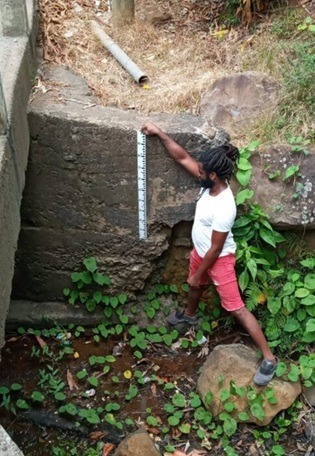
In Dominica, the Dominica Red Cross Society worked with communities to establish Community Early Warning Systems (CEWS) for floods and other hazards. Vulnerability and Capacity Assessments helped identify communities at risk and informed the design of the systems. Community members were then trained to monitor rainfall and river levels, communicate warnings and take action when conditions became dangerous. 

In Marigot, this system demonstrated how locally managed early warning can lead directly to early action. During a period of heavy rainfall, a trained community member monitoring the system identified an imminent flood risk and alerted people living near the river. One particularly exposed resident was warned and evacuated to a designated shelter before flooding occurred. 

The experience highlights the importance of connecting risk assessments, locally monitored warning signs, clearly assigned responsibilities and agreed actions. It also shows why CEWS should be developed with communities and linked to local authorities and national warning systems, rather than operating as stand-alone mechanisms. 

Key lesson: A community early warning system becomes an anticipatory action mechanism when a warning is connected to agreed actions that can be implemented before the hazard causes severe impacts. 

Source: adjusted and shortened from Global Disaster Preparedness Center (2024), “Dominica Building Resilience Through Community Early Warning Systems” (link in the toolbox). 

Step 4.2: Integrate the CEWS and AA into new or updated Community Contingency Plans

If one of the activities included in the community resilience plan of action is to develop or update a contingency plan, use it to include clearly identified early actions within it. 

Community contingency planning focuses on priority hazards that the community identified in the assessment. It includes the development of scenarios (best, likely, worst case) and describes the hazard and its characterization, potential impacts and risks to people, properties, systems etc. Contingency plans also include decision making points when they will be activated, describing actions before, during and after the arrival of a specific hazard. Contingency plans are therefore perfect to include early actions. For example, a community contingency plan could specify early actions for one or several specific hazards, aligning immediate early actions based on a forecast/early warning with procedures, roles and responsibilities that are already described in the contingency plan, therefore creating a more comprehensive risk reduction tool. 

The contingency plan can basically include a small and simpler version of a s/EAP, ensuring that integral elements are agreed upon and written down in one place. These elements include: 

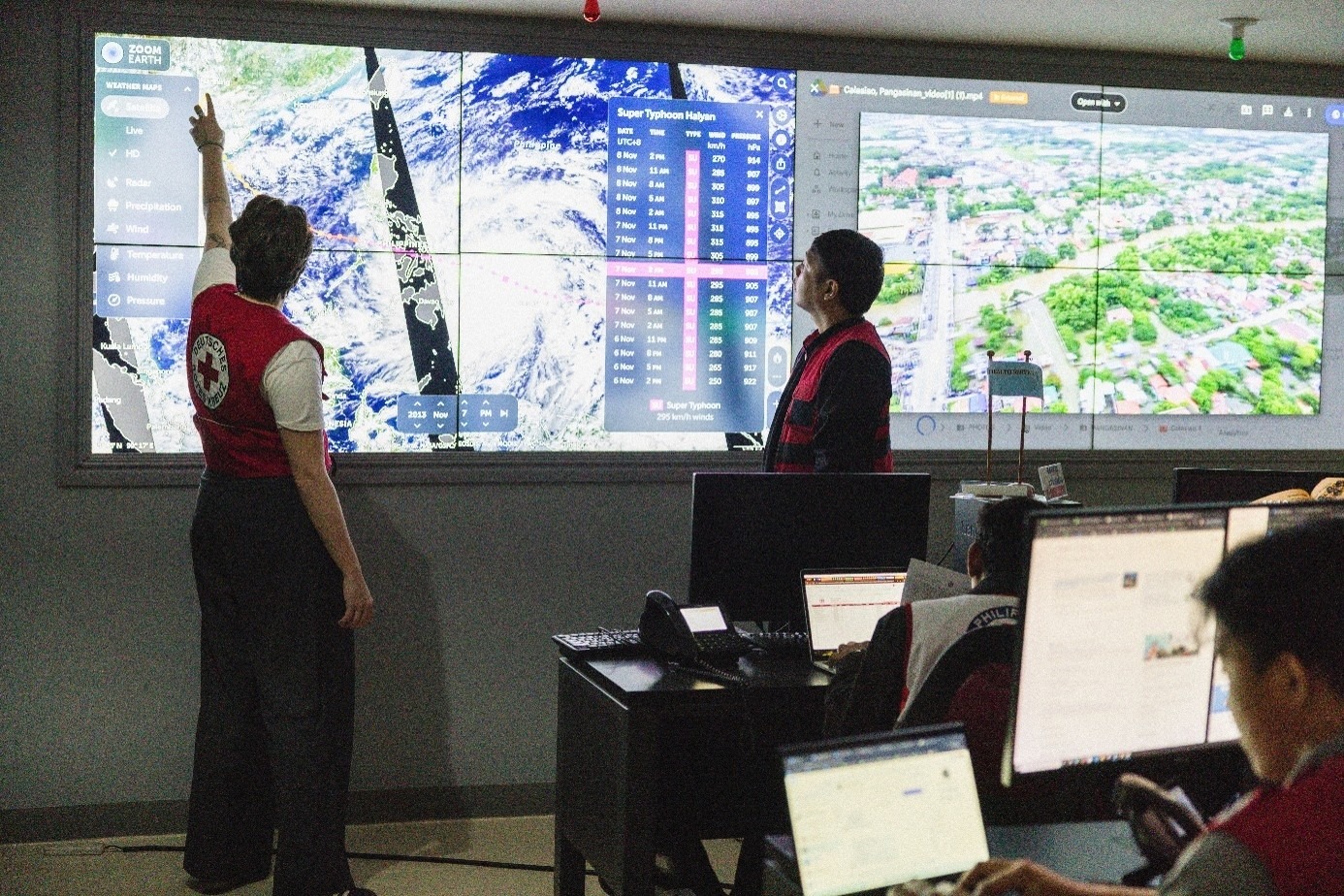
To trigger early actions as part of a contingency plan, local early warning or national early warnings can be used, for example as part of a CEWS. The EVCA helps you to assess with the community, if national or local early warning systems are in place that can be used, or if the community wants to develop its own indicators to monitor locally (e.g. river gauges, traditional knowledge signs, urban heat islands etc) and set local specific triggers on when to act through a CEWS planning process. It can also help you to understand, how much lead time each early warning system would provide and if this lead time would be sufficient to conduct early actions.

Assess if national anticipatory action and trigger systems (e.g. s/EAPs of the national society, government frameworks) exist and could potentially be linked to or complement the community system. Always check if the government or other humanitarian actors have already developed a trigger for a specific hazard to implement early actions and if the community could have access to this trigger. 

In case you decide with the community to use national forecast information as a trigger, please consult chapter ’06. Determine activation trigger’ in this manual.

Early actions should be identified together with the community, building on the EVCA wherever possible. The aim is to move from identifying risk and impact to agreeing on practical actions that can be taken in the lead time before the hazard occurs. These early actions should be tailored to the local context, feasible within the available lead time and capacities and aligned with community priorities and existing risk reduction measures and plans. In practice, this may include simple, low-cost or no-cost measures such as community cleaning campaigns, protecting household assets, securing livelihoods, or mobilizing community volunteers to guide evacuations to safer grounds. Once identified, the early actions should be clearly documented, so that when an early warning is issued, it can trigger timely and concrete early actions in the community. 

For more details on how to choose early actions, please refer also to chapter ’07. Select Early Actions’ in this manual 

The R2R guidance recommends creating community resilience teams with clear roles and responsibilities. Assigning somebody to be the focal point for anticipatory action will help ensure that ownership and responsibility remain within the community set-up.  

The contingency plan is a natural home in writing the different roles and responsibilities down, as it already sets out roles, resources and actions before, during and after a hazard. Together with the community therefore also incorporate the different roles and responsibilities of the early actions in the contingency plan and the community resilience committee. Assess, if your local National Society branches and volunteers can support the community by also having agreed roles and responsibilities in activating the plan and implementing early actions. 

To ensure sustainability, it is essential to explore any available local funding mechanisms that can support the implementation of early actions. Explore together with the community, if there are any existing government risk reduction funds that could be leveraged for funding early actions or if it is possible to establish new funding channels through local authorities. Another option could be to explore the mobilization of funding through existing or new community funding schemes or non-government stakeholders. 

Whichever way is chosen, if funding is secured, or the community decides to opt for no-cost early actions, it should always be ensured that the solution is sustainable and creates a system that fits the community best. 

Ideally, the integrated community contingency plans also align with existing national, regional and municipal disaster management and anticipatory action systems and policies. 

The case of the imminent disaster law in the Philippines

In September 2025, the Philippines signed the ‘Declaration of State of Imminent Disaster Act’ into law. It allows the national government of the Philippines to declare a state of an imminent disaster. This imminent disaster can be declared already when a hazard, likely to develop into a disaster, is approaching, instead of declaring a disaster only after the event. The bill institutionalized anticipatory action and allows local government units to use funds from their local disaster risk reduction and management fund for early actions.

When speaking about the integration of anticipatory action into CBDRR, this law gives communities the possibility to include early actions into their contingency or disaster risk reduction plans, with the choice of how they want to use the local DRR funds once the state of imminent disaster is declared. The declaration of the imminent disaster would act in such a case as a final trigger which releases the funds.

As with s/EAPS and CEWS, it is also important to test the community contingency plan through simulation exercises and drills. If possible and if the National Societies s/EAP covers the same hazard, you can also link it with a simulation of the s/EAPs where the local branch is involved. 

A simulation does not only test the plan’s effectiveness but also helps increase visibility within the community and highlights capacities and gaps to institutional stakeholders, which can be the basis for community advocacy on funding and budgetary requirements. 

Toolbox
Quiz

Specific guidance on anticipatory action in community-based disaster risk reduction

1 / 5

What is one way to integrate anticipatory action into community-based disaster risk management?

2 / 5

Early actions should be identified together with the community and should be feasible within the available lead time and local capacities.

3 / 5

Which elements can be included when integrating anticipatory action into a community contingency plan?

4 / 5

What is an important purpose of a community early warning system (CEWS) in anticipatory action?

5 / 5

Community contingency plans that include anticipatory action should ideally be tested through simulations or drills.

Your score is

The average score is 0%

0%